
ISO 22000 Certification in Brazil
Improve food safety, build consumer confidence, and support global market requirements with ISO 22000 Certification in Brazil. As a major producer and exporter of food and agricultural products, Brazilian businesses face strong expectations for quality, traceability, and regulatory compliance.
ISO 22000 is an internationally recognized food safety management system standard that helps organizations identify hazards, establish preventive controls, and maintain safe production and handling practices throughout the entire food supply chain.

Why ISO 22000 Certification Matters in Brazil
Brazil’s food industry operates in a highly regulated market with strong expectations for food safety, hygiene, and product quality. Food manufacturers, processors, distributors, and retailers must maintain reliable controls to protect consumers and meet supply chain requirements.
ISO 22000 certification helps organizations build a proactive food safety system that reduces contamination risks, supports compliance, and improves operational consistency.
Certification shows your commitment to safe food production while strengthening credibility with customers, regulators, retailers, and business partners.
What is ISO 22000 Certification?
ISO 22000 is an international Food Safety Management System standard developed by the International Organization for Standardization (ISO).
ISO 22000 Certification Requirements
To achieve ISO 22000 certification, organizations must:
✔ Develop a Food Safety Management System
✔ Identify food safety hazards and risks
✔ Define food safety policy and objectives
✔ Establish prerequisite programs and HACCP controls
✔ Ensure compliance with applicable food safety regulations
✔ Conduct internal audits
✔ Perform management reviews
✔ Implement corrective and preventive actions
Benefits of ISO 22000 Certification in Brazil
Enhanced Food Safety
Implement effective controls to prevent contamination and food safety incidents.
Regulatory Compliance
Support compliance with German and European food safety regulations.
Improved Customer Trust
Demonstrate commitment to food quality and consumer protection.
Better Risk Management
Identify and manage food safety risks before they affect operations.
Increased Market Opportunities
Access new markets and strengthen relationships with customers and retailers.
Improved Operational Efficiency
Standardized procedures help improve consistency and reduce waste.
Strong Brand Reputation
Build confidence among consumers, partners, and stakeholders
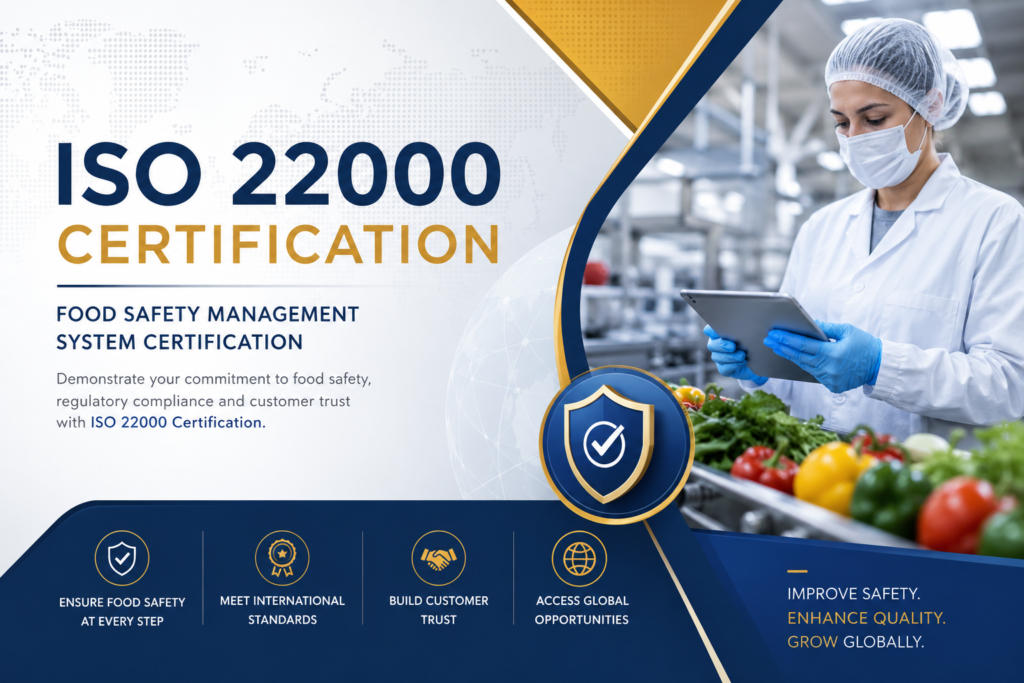
ISO 22000 Certification Requirements in Brazil
Businesses preparing for ISO 22000 certification in Brazil generally need to:
✔ Build a documented Food Safety Management System
✔ Assess food safety hazards across processes and supply chains
✔ Put prerequisite programs in place for hygiene, sanitation, and facility control
✔ Set clear food safety goals, responsibilities, and policies
✔ Maintain traceability for ingredients, suppliers, production, and distribution
✔ Control and monitor key food safety measures
✔ Review compliance with ANVISA, MAPA, and applicable local requirements
✔ Carry out internal audits to check system performance
✔ Hold management reviews to evaluate results and improvements
✔ Pass an independent certification audit by an accredited body
LIMITED TIME OFFER
Get Your Custom Quote Today
Fill out the form to unlock your exclusive pricing and rapid implementation plan.
- Transparent Pricing
- No Hidden Fees
- Full Documentation Support
- Audit Preparation Included
Our Proven Path to ISO 22000 Certification
Our structured certification process helps food businesses achieve compliance efficiently while maintaining operational continuity.
1
We evaluate your products, production processes, supply chain activities, and food safety objectives to determine the scope of your FSMS.
2
We develop food safety policies, procedures, hazard controls, traceability systems, and required documentation while supporting implementation.
3
We coordinate with an accredited certification body for Stage 1 and Stage 2 audits to verify compliance with ISO 22000 requirements.
4
Our experts assess your existing food safety practices against ISO 22000 requirements and identify improvement opportunities.
5
We perform internal audits and facilitate management reviews to ensure your organization is fully prepared for certification.
Get Certified!
Receive your official ISO 22000 Food Safety Management System certificate and demonstrate your commitment to safe, high-quality food production.

Why Choose Isomark Global?
We make ISO certification simple, secure, and efficient.
Expert ISO 22000 Consultants
Food safety specialists with extensive implementation experience.
Fast Certification Support
Efficient processes designed to accelerate certification.
Complete Documentation Assistance
Customized documentation tailored to your food operations.
Audit Preparation
Comprehensive guidance to ensure certification readiness.
Affordable Pricing
Transparent and competitive certification solutions.
Ongoing Compliance Support
Continued assistance to maintain certification and improve food safety performance.
ISO 22000 Certification FAQs
What is required for ISO 22000 certification in Brazil?
A business needs a documented Food Safety Management System with hazard controls, traceability, internal audits, and management reviews.
It must also complete an independent certification audit by an accredited body.
Does ISO 22000 replace Brazilian food safety laws?
No, ISO 22000 does not replace local food safety regulations in Brazil.
It helps companies organize their processes and support compliance with ANVISA, MAPA, and other applicable requirements.Any organization involved in the food supply chain can benefit from ISO 22000 certification.
Is ISO 22000 mandatory in Brazil?
Is ISO 22000 mandatory in Brazil?No, ISO 22000 is not legally mandatory for most food businesses in Brazil.
However, it can be required by customers, retailers, exporters, or supply chain partners.
How long does ISO 22000 certification take?
The timeline depends on business size, process complexity, and current food safety controls.
Companies with strong documentation and trained staff usually complete the process faster.